
EU MDR · EU IVDR · EUDAMED
UDI for medical devices and IVDs
Unique device identification connects the regulatory device model, the marketable device, its production data and the records held in EUDAMED.
Basic UDI-DI, UDI-DI and UDI-PI are related, but they do different jobs. A controlled UDI system keeps the label, packaging, declaration, certificates, technical documentation and database record aligned throughout the device lifecycle.
The identifier hierarchy
One UDI system, three different levels of identity
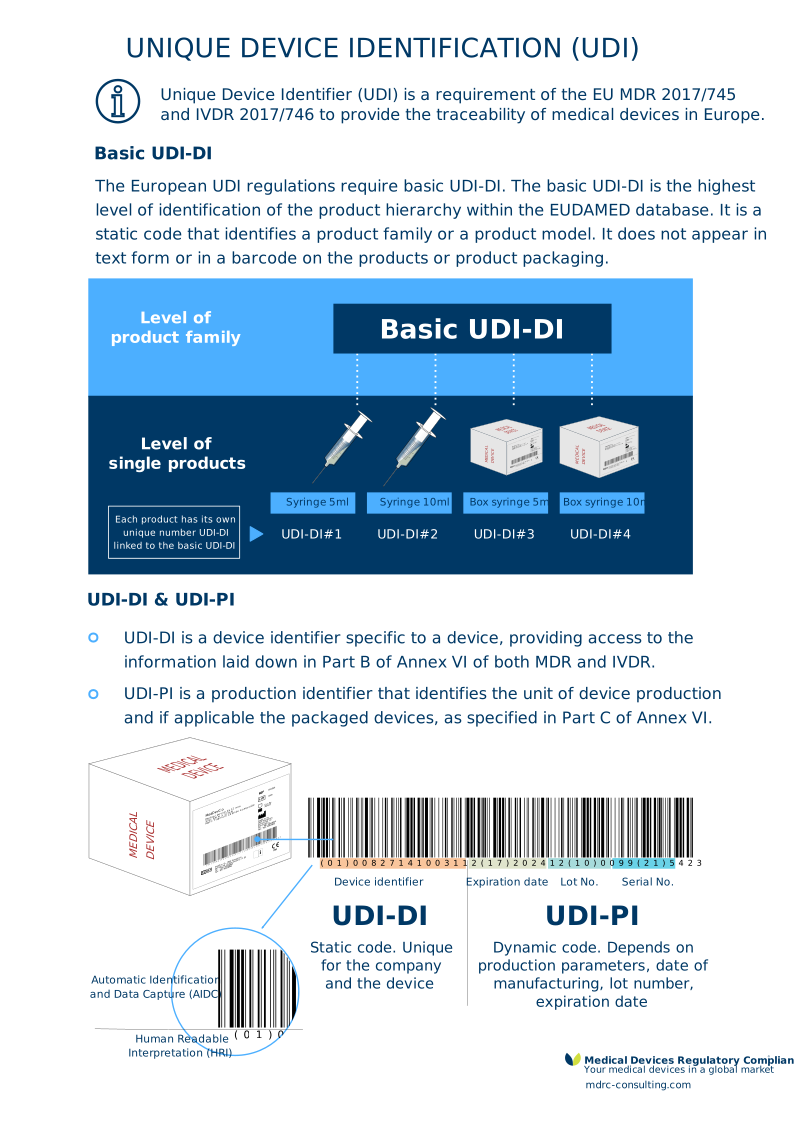
The Basic UDI-DI groups a device model for regulatory purposes. The UDI-DI identifies a specific device version and packaging level. The UDI-PI supplies the variable production information needed to trace an individual unit or production group.
Regulatory model key
Basic UDI-DI
The primary identifier of a device model. It connects devices with the same intended purpose, risk class and essential design and manufacturing characteristics.
- Used in
- EUDAMED, declarations, certificates and technical documentation
- Printed on label
- No
Device and packaging key
UDI-DI
The fixed device identifier assigned to a specific device model. Each higher packaging level generally has its own UDI-DI, except for shipping containers.
- Used in
- UDI carrier, packaging hierarchy and EUDAMED device record
- Changes with
- Defined changes affecting identification or traceability
Production traceability key
UDI-PI
The variable production identifier. Its content is determined by the production information used for the device and by the chosen issuing entity's system.
- May contain
- Lot, batch, serial, software ID and relevant dates
- Changes with
- The applicable production information
The UDI carrier has two readable forms
Automatic identification and data capture provides the machine-readable form. Human readable interpretation presents the encoded data in plain text. Both must be generated from the same controlled source data.
Where each identifier belongs
Put the right identifier in the right controlled record
UDI failures often begin when one number is copied everywhere without distinguishing the model, device, packaging and production levels. The following map keeps their roles separate.
Implementation sequence
Build UDI from product architecture, not from label artwork
Label generation is one output of the UDI system. The source of truth must start with the device model, packaging structure, issuing-entity rules and governed product data.
-
01
Define the device model
Confirm intended purpose, risk class, design and manufacturing characteristics, variants and the Basic UDI-DI grouping logic.
-
02
Select an issuing entity
Apply the coding standard and allocation rules of an entity designated by the European Commission.
-
03
Map every packaging level
Assign UDI-DIs to the device and applicable higher packaging levels, excluding shipping containers.
-
04
Define production identifiers
Determine which lot, serial, software and date elements form the UDI-PI for each device configuration.
-
05
Generate and verify the carrier
Create matching AIDC and human-readable forms and verify print, scan and data quality on the final label and packaging.
-
06
Register the controlled data
Prepare and submit the applicable Basic UDI-DI and UDI/device data to EUDAMED with defined ownership and review.
-
07
Control lifecycle changes
Assess every product, packaging, labelling and software change for a new UDI-DI and linked record updates before release.
Current implementation status
UDI is now both a label system and a mandatory EUDAMED data process
The UDI/Device registration module became mandatory on 28 May 2026 as part of the phased EUDAMED rollout. Device-specific transition handling still needs to be checked against its market and regulatory status.
Check the European Commission EUDAMED overviewMDR medical devices
IVDR in vitro diagnostic devices
Direct marking of reusable devices follows separate timing and exceptions. Confirm the applicable rule for the specific product.
Visual guide
See the complete UDI relationship in one view
Use the scalable diagram on screen for reference. Download the PDF when you need a stable one-page version for a meeting, training file or controlled project record.
Common control failures
Test the connections, not only the barcode
A scannable symbol can still carry the wrong identifier. Effective review follows the source data through every output and checks how changes are assessed before the device is released.
Model grouping without a rationale
Products share a Basic UDI-DI although their intended purpose, class or essential characteristics do not support one model group.
Packaging levels left unmapped
A single UDI-DI is reused across package levels without confirming the regulatory requirement or issuing-entity allocation rule.
Production data and carrier disagree
Lot, serial or date data in the machine-readable carrier does not match the human-readable information or released production record.
Artwork and EUDAMED drift apart
Device names, package quantities, identifiers or status data are changed in one system without updating the other controlled records.
Change control misses UDI impact
Product, software or labelling changes are approved without a documented decision on new identifiers and database updates.
Ownership is divided without governance
Regulatory, labelling, IT and production teams each control part of the process, but no one reconciles the complete identity chain.
Primary sources
Verify the applicable rule in the official source
The regulation controls the obligation. MDCG documents and issuing-entity specifications help implement it, but they do not replace the legal text.
Regulation (EU) 2017/745
Article 27, Article 29 and Annex VI for medical devices
Regulation (EU) 2017/746
Article 24, Article 26 and Annex VI for IVDs
EUDAMED overview
European Commission status and module information
MDCG guidance library
Current European Commission guidance organised by topic
Frequently asked questions
Practical UDI distinctions
These answers explain the structure. Device-specific exceptions, direct marking, system and procedure pack rules, and legacy-device handling still require a focused assessment.
Is the Basic UDI-DI printed on the device label?
No. The Basic UDI-DI is the primary identifier of a device model in the regulatory system. It is referenced in EUDAMED and relevant regulatory documentation, but not placed on the UDI carrier.
Does every packaging level need its own UDI-DI?
Each higher level of device packaging generally requires its own UDI-DI. Shipping containers are excluded. Check the applicable exceptions and issuing-entity rules for the specific configuration.
Is the UDI-PI a fixed code?
No. The UDI-PI contains applicable production information such as a lot or batch, serial number, software identification, manufacturing date or expiry date. Its value changes with production.
When is a new UDI-DI needed?
A new UDI-DI is required when a change could lead to misidentification of the device or ambiguity in its traceability. Apply Annex VI and the rules of the chosen issuing entity through controlled change assessment.
Is EUDAMED UDI registration mandatory?
The UDI/Device registration module became mandatory on 28 May 2026 as part of the phased implementation of EUDAMED. Confirm the precise record and timing requirements for the device and its regulatory status.
Connect the identity chain
Make UDI data part of product and change control
MDRC can review Basic UDI-DI grouping, packaging architecture, label data, EUDAMED records and change controls against the specific device portfolio.
Discuss your UDI implementation